Dr. Sheela Basrur
Early education and career
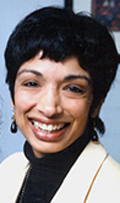 The daughter of immigrants who arrived from India, Dr. Sheela Basrur was born in Toronto in 1956. Basrur’s exposure to science came at an early age, observing the progression of her parents' careers. Her mother, Dr. Pari Basrur, worked as a veterinary genetics professor and her father, Dr. Vasanth Basrur, was a radiation oncologist.
Basrur’s studies earned her a bachelor of science degree from the University of Western Ontario in 1979. Three years later, she completed her doctor of medicine degree from the University of Toronto.
Following graduation, she worked as a general practitioner. While travelling to Nepal and India, she saw the importance of preventative health practices in these two countries and became passionate about public health. After she returned to Canada, she obtained a master of health science degree from the University of Toronto in 1987, specializing in community medicine.
She was medical officer of health for East York 1992 to 1998. In 1998, Dr. Basrur became the first medical officer of health in the amalgamated City of Toronto, leading 1,800 employees from six former municipalities and managing an annual operating budget of $160 million – the largest in Canada. Dr. Basrur was also an assistant professor in the department of public health sciences at the University of Toronto.

2003 SARS outbreak
It was Dr. Basrur's expertise and exemplary leadership during the Severe Acute Respiratory Syndrome (SARS) crisis that solidified her reputation. Her tireless efforts to communicate about the crisis and control the outbreak earned her respect and recognition from the public and the health sector, in Ontario, and around the world. She was a highly visible figure during the outbreak, appearing regularly in the media alongside her friend and colleague, Dr. Donald Low, former medical director of the department of microbiology at Mount Sinai Hospital and the University Health Networks.
After the SARS outbreak, Dr. Basrur led a number of public health initiatives: a city-wide smoking ban in 2004, a city plan to tackle bioterrorism post 9/11and a proposed ban on non-essential pesticides. She was also instrumental in DineSafe, a system that shows diners the food safety rating of local restaurants. A first in Canada, DineSafe requires restaurants to post health inspection pass or fail results in their windows.
In February 2004, Dr. Basrur was appointed Ontario’s chief medical officer of health (CMOH) and assistant deputy minister of public health division in the MInistry of Health and Long-Term Care. As CMOH, she lead the development of Ontario's ground-breaking Smoke-Free Ontario legislation and influenced the 2006 provincial Action Plan for Healthy Eating and Active Living, that addressed rising obesity among Ontarians.
Creation of Public Health Ontario
As a response to SARS, Basrur spearheaded Operation Health Protection, a three-year action plan to create Ontario's first public health agency. Dr. Basrur was one of the visionaries behind the agency and her leadership culminated in the passage of the Ontario Agency of Health Protection and Promotion Act, 2007, establishing Public Health Ontario as an arm’s-length government agency. On June 4, 2007 Dr. Basrur received a standing ovation from MPPs in the Ontario legislature as the bill passed into legislation.
Last years
Dr. Basrur was diagnosed with a rare form of cancer in the fall of 2006, forcing her to resign as CMOH later the same year. Throughout her illness, she kept her indomitable spirit. When speaking to family and friends about the changes to her body caused by her treatments, she often infused her candid observations with her trademark humour.
Dr. Basrur kept a close circle of friends and colleagues as well as an extended network of supporters. When her cancer took a turn for the worse, she noted the irony of spending her career helping people stay out of hospitals. She passed away on June 2, 2008 at the age of 51, at the Grand River Hospital in Kitchener, Ontario.
Dr. Basrur’s commitment to public health played a pivotal role in the renewal of the province's health care system. Her spirit and legacy continues at the Sheela Basrur Centre, as the Centre carries out its mission to strengthen current and future public health leaders.
Awards
During her lifetime, Dr. Basrur received many accolades and awards for her commitment and achievements including, the Order of Ontario; the Amethyst Award (the highest award granted to a member of the Ontario Public Service); honourary doctorates from Ryerson University, York University and the University of Toronto; honourary diploma of nursing from George Brown College; and the Woman of the Year distinction from the Greater Toronto YWCA.