|
|
Page Content Congratulations to 2016 Student Travel Bursary Recipient
Danica Desjardins
Danica is a Masters of Public Health student at Queen's University. In May 2016, Danica embarked on a four month placement with the Aqqiumavvik Society in Nunavut.
She participated in the design and facilitation of a community-based project that focused on strengthening mental health outcomes through healthy family relationships within the Inuit community.
Highlights from Danica’s journey are detailed in her travel log below.
Danica's experience
.jpg) Known
for its long, cold winters and beautiful aurora
borealis, Canada’s newest territory, Nunavut, is home to 33,000 people, 85%
of whom are Inuit (Government of Nunavut, 2016). Like all of Canada’s
Indigenous peoples, Inuit living in Nunavut experienced colonization at the
hands of the Canadian government. However, this shift in way of life – from
nomadic and living off of the land, to sedentary, “Western” living – happened
much later for Inuit than for most of Canada’s First Peoples, with resettlement
beginning in the 1950s (Government of Nunavut, 2016). This forced relocation
and associated events, including the imposition of residential schools and
tuberculosis sanatoria, have had unique impacts on the health of Inuit that are
only beginning to be understood. Known
for its long, cold winters and beautiful aurora
borealis, Canada’s newest territory, Nunavut, is home to 33,000 people, 85%
of whom are Inuit (Government of Nunavut, 2016). Like all of Canada’s
Indigenous peoples, Inuit living in Nunavut experienced colonization at the
hands of the Canadian government. However, this shift in way of life – from
nomadic and living off of the land, to sedentary, “Western” living – happened
much later for Inuit than for most of Canada’s First Peoples, with resettlement
beginning in the 1950s (Government of Nunavut, 2016). This forced relocation
and associated events, including the imposition of residential schools and
tuberculosis sanatoria, have had unique impacts on the health of Inuit that are
only beginning to be understood.
- Danica Desjardins
Danica Desjardins (left) with practicum supervisor and
head of Aqquimavvik Society, Shirley
Tagalik (right).
The
hamlet of Arviat, located on the west coast of Hudson’s Bay just north of the
Manitoba border, is Nunavut’s second-largest community. Steeped in culture and
tradition, Arviat is home to approximately 3,000 people, 60% being under the
age of 16 (Arviat Wellness Working Group, 2011). The majority of Arviarmiut (community members of Arviat)
speak both Inuktitut and English, and often partake in traditional activities
such as caribou hunting. During my placement, I was fortunate to be able to
work with the Aqqiumavvik Society
(previously the Arviat Wellness Centre), which is a grassroots organization led
by Shirley Tagalik, promoting health and wellness in Arviat through a variety
of means, including workshops and media. The Aqqiumavvik Society employs local people- most often youth and
young adults- to carry out research and programming surrounding any health
issue identified by the community. For instance, upon learning that many Arviarmiut prefer to collect their own
drinking water from a river a short distance away from the community (rather
than drinking the treated municipal water), the Aqqiumavvik Society began testing the river water weekly for
potential E. coli contamination.
Project highlights
.jpg) Working
with the Aqqiumavvik Society, I was
able to assist with two main projects. The first, led by Queen’s University Master
of Public Health student Jessica Baumhour, was the creation of a Family Support
Team pilot program aimed to improve school attendance in Arviat, which averaged
roughly 60% across the elementary, middle, and high schools. A 2013 survey of
parents of low-attending students found that difficulty establishing a morning
routine for school-aged children and being preoccupied with other children in
the household were the main factors contributing to low attendance (Arviat
Wellness Centre, 2013). This sentiment was echoed in informational interviews
we conducted with local professionals who worked with families and youth. As a
result, a steering committee composed of representatives from the local
schools, daycare, and board of education determined that by teaching parenting
skills and helping families to address their organizational needs, families
would be better equipped to send their children to school more regularly. Together,
we outlined the implementation of the Family Support Team program, including a
needs assessment, background research, referral process, training curriculum,
allocation of funds, and program evaluation. Emphasis was placed on ensuring
the program placed Inuit traditional knowledge at the forefront. For instance,
advice from Elders was incorporated and traditional toys were purchased for use
during the home visits. Working
with the Aqqiumavvik Society, I was
able to assist with two main projects. The first, led by Queen’s University Master
of Public Health student Jessica Baumhour, was the creation of a Family Support
Team pilot program aimed to improve school attendance in Arviat, which averaged
roughly 60% across the elementary, middle, and high schools. A 2013 survey of
parents of low-attending students found that difficulty establishing a morning
routine for school-aged children and being preoccupied with other children in
the household were the main factors contributing to low attendance (Arviat
Wellness Centre, 2013). This sentiment was echoed in informational interviews
we conducted with local professionals who worked with families and youth. As a
result, a steering committee composed of representatives from the local
schools, daycare, and board of education determined that by teaching parenting
skills and helping families to address their organizational needs, families
would be better equipped to send their children to school more regularly. Together,
we outlined the implementation of the Family Support Team program, including a
needs assessment, background research, referral process, training curriculum,
allocation of funds, and program evaluation. Emphasis was placed on ensuring
the program placed Inuit traditional knowledge at the forefront. For instance,
advice from Elders was incorporated and traditional toys were purchased for use
during the home visits.
Participating
in this project allowed me to deepen my understanding of education as a social
determinant of health. Through conversation with the Arviarmiut, it became very apparent that education (or lack of) interacted
with other social determinants to contribute to poor health status. Having
always been very interested in education, I found myself very invested in this
project and inspired to continue working on initiatives combining health and
education. In particular, I found it very interesting that the Nunavut school
curriculum is not tailored to Inuit children, and how this might contribute to
the low attendance rates and general lack of interest in school and pursuing
post-secondary education. This is an area that I hope to explore in the future.
The
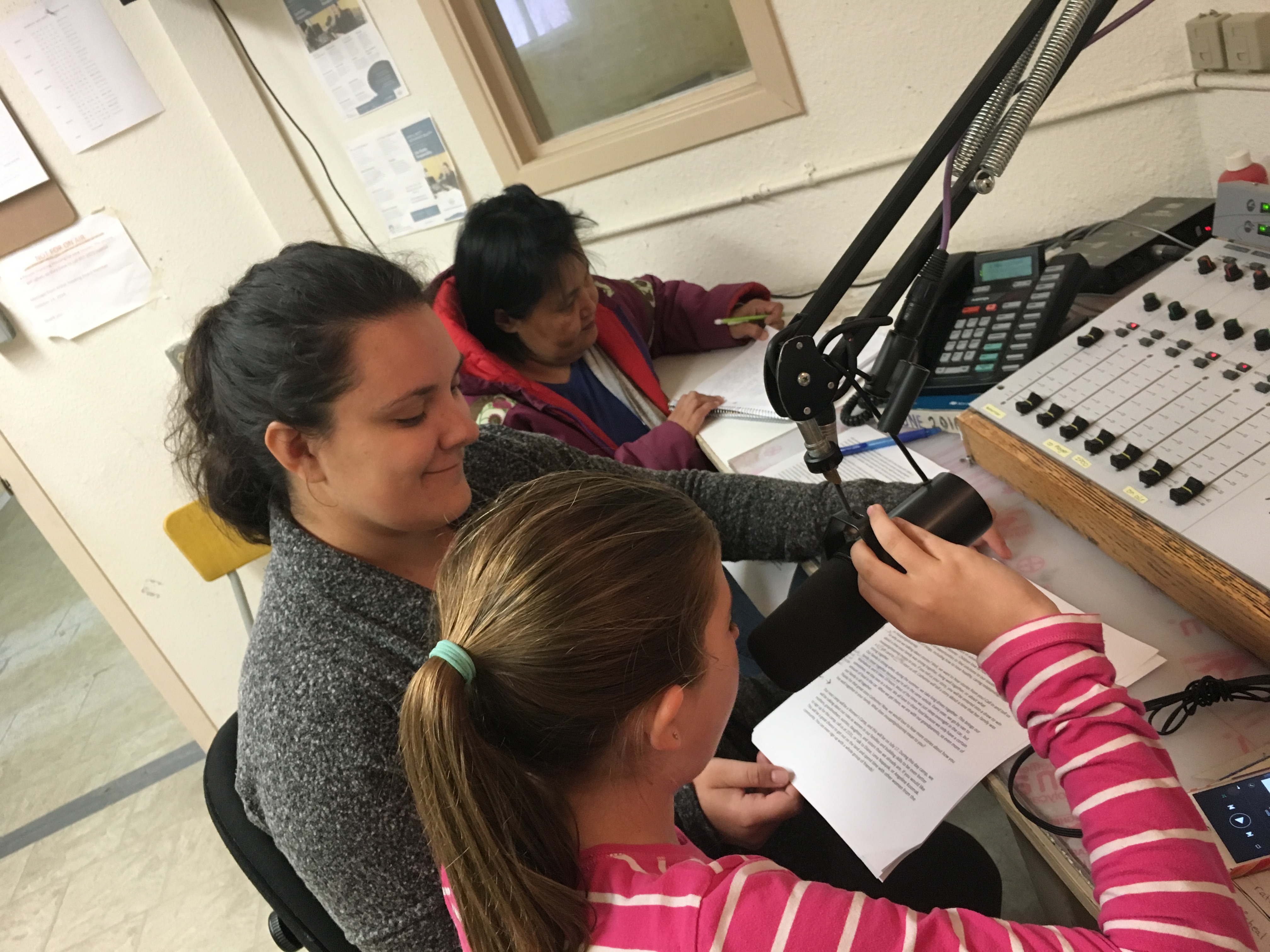
second project I was involved in was the Inuuqatigiitsiarniq
Camp Program (ICP). The inspiration for this program came from Shirley
Tagalik, who had previously organized an event for Elders to come together to
discuss their experience of forced relocation. This event was received positively,
garnering many listeners and observers from the community, making it highly apparent
that there was a need for more conversations like these. With the goal of recognizing and healing from
past trauma (including intergenerational trauma), Shirley created ICP as a
series of retreats for different groups of the population – namely, Elders,
youth, families, men, and women. These
retreats brought the community together to discuss pertinent issues and
presented an opportunity for discussion that might not have existed otherwise. With
the focus on the importance of strong, healthy relationships, these retreats honoured
the Inuit traditional knowledge principle
of inuuquatigiitsiarniq, meaning
respecting others, relationships, and caring for people. By fostering positive
connections with others and understanding that the experience and ramifications
of colonialism are shared, ICP aims to promote emotional healing, building upon
resources for wellbeing. This program provides the opportunity for counseling
to take place, and to build strong families and communities. While I was able
to serve in an organizational capacity for this project, it was very much
community-led by a steering committee and a team of five sub-committees
dedicated to planning the retreats for each group.
Personal reflections
 My
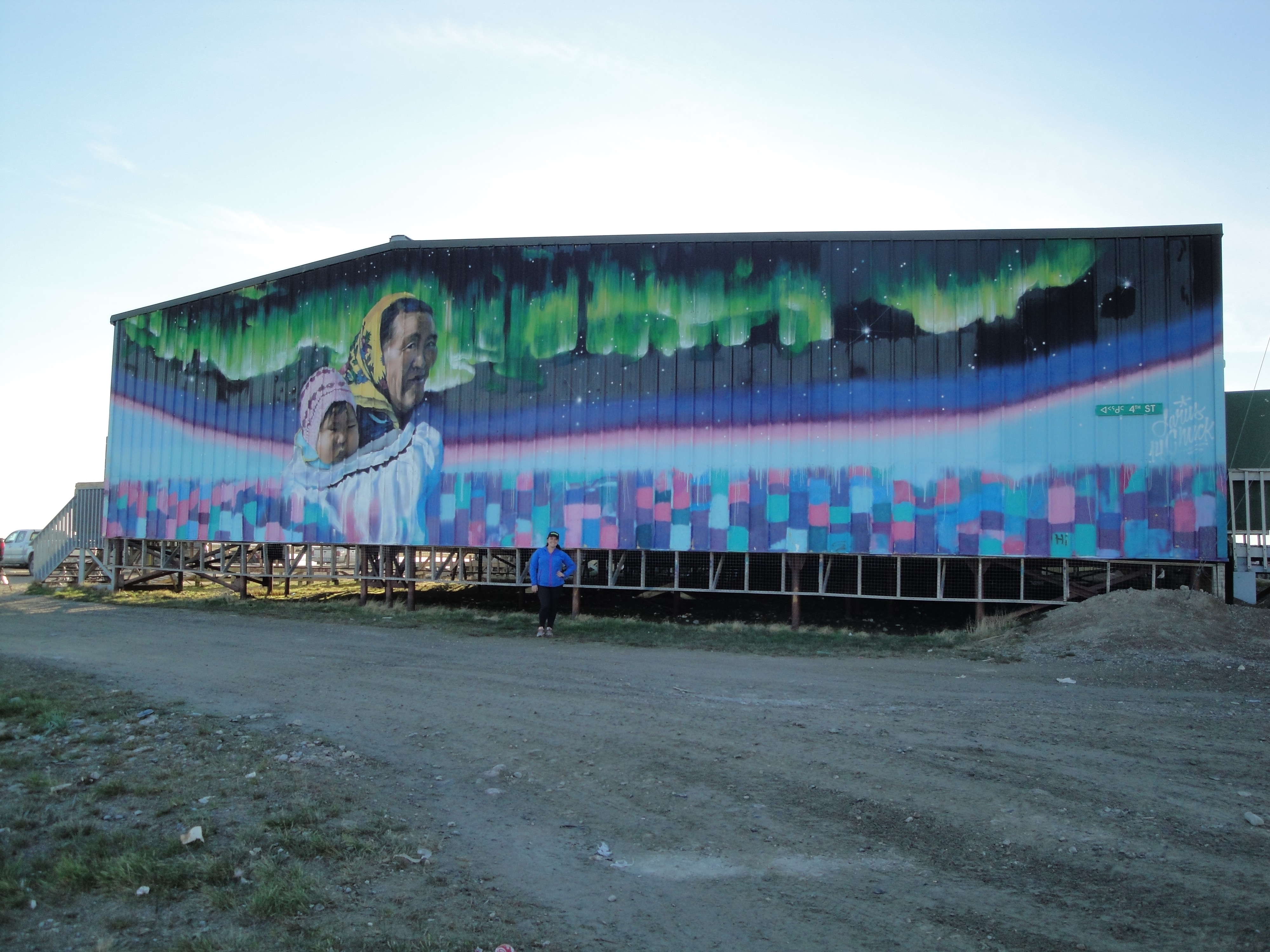
time in Arviat was, above all else, an incredible learning experience. Being
able to experience Canada’s North first-hand was both eye-opening and life-changing,
and truly affirmed my opinion that global health begins at home. Navigating
challenges such as language barriers, a sensitive local political climate,
unusual work environment, high cost of food, and sometimes even lack of water took
a backseat to the incredible experience of interacting and connecting with local
people and learning about Inuit culture. Moreover, I will never forget the
magical feeling of descending under the clouds on May 9th, 2016, and
seeing the frozen tundra from the air, or feeling like I was flying across the
ice on my way to an ice fishing spot on Hudson Bay. However, I will also never
forget the lump in my throat when the community of Arviat grieved the loss of
yet another young person from suicide, or the tightness in my chest when
hearing about housing shortages forcing ten-person families to live in
two-bedroom homes. The gaps in public health in Arviat are complex and
multi-faceted, and the health needs of Inuit are highly unique and poorly
understood. My
time in Arviat was, above all else, an incredible learning experience. Being
able to experience Canada’s North first-hand was both eye-opening and life-changing,
and truly affirmed my opinion that global health begins at home. Navigating
challenges such as language barriers, a sensitive local political climate,
unusual work environment, high cost of food, and sometimes even lack of water took
a backseat to the incredible experience of interacting and connecting with local
people and learning about Inuit culture. Moreover, I will never forget the
magical feeling of descending under the clouds on May 9th, 2016, and
seeing the frozen tundra from the air, or feeling like I was flying across the
ice on my way to an ice fishing spot on Hudson Bay. However, I will also never
forget the lump in my throat when the community of Arviat grieved the loss of
yet another young person from suicide, or the tightness in my chest when
hearing about housing shortages forcing ten-person families to live in
two-bedroom homes. The gaps in public health in Arviat are complex and
multi-faceted, and the health needs of Inuit are highly unique and poorly
understood.
Working
in the North offered me a sobering view of how the social determinants really
do impact health. Although the lack of healthcare services – including a lack
of permanent physicians and of a birthing centre – cannot be understated, it is
my opinion that addressing the social determinants of health is of utmost
importance to improve the health of Arviarmiut.
Through interviews, focus groups, and personal conversations with community
members, I feel that I was able to truly listen to local people and hear their
personal experiences of health, rather than making assumptions based on
generalizations and stereotypes. I feel accomplished and satisfied knowing that
the projects I was involved in were truly community-driven and rooted in
capacity-building for the people of Arviat, which is vital from a global health
perspective. Despite challenges along the way, the time that I spent with the Aqqiumavvik Society, made possible by
the support of the Sheela Basrur Centre, was an incredible opportunity that has
shaped the way I view the field of public health. Canada’s Arctic, and
especially Arviat, Nunavut, will forever hold a place in my heart, and I am
certain that my first journey north will not be my last.
References
Arviat
Wellness Centre, (2013). 2013 Arviat
Education Survey Results. Arviat, NU.
Arviat
Wellness Working Group. (July 2011). Arviat
Community Wellness Plan. Retrieved from https://www.tunngavik.com/files/2011/12/community-plan_arviat_english_web.pdf
Government
of Nunavut. (March 2016). Health Profile
Nunavut: Information to 2014. Retrieved from: http://www.gov.nu.ca/sites/default/files/files/health_profile_nunavut.pdf
|