|
|
Page Content
2014 Student Travel Bursary Recipients
Erin Moses
Prior to completing her Master’s of Public Health at the University of Toronto, Erin Moses embarked on a challenging four month practicum placement in Uganda to work on the Aspire Cervical Cancer Screening project. Aspire is an international women's health initiative that is aiming to save thousands of lives by implementing an integrated cervical cancer screening program in Eastern Africa. The program is scalable and affordable, using self-collection for the human papillomavirus (HPV). The Aspire project was established in 2009 in collaboration between the University of British Columbia in Canada and the Makerere University in Uganda.
Erin's experience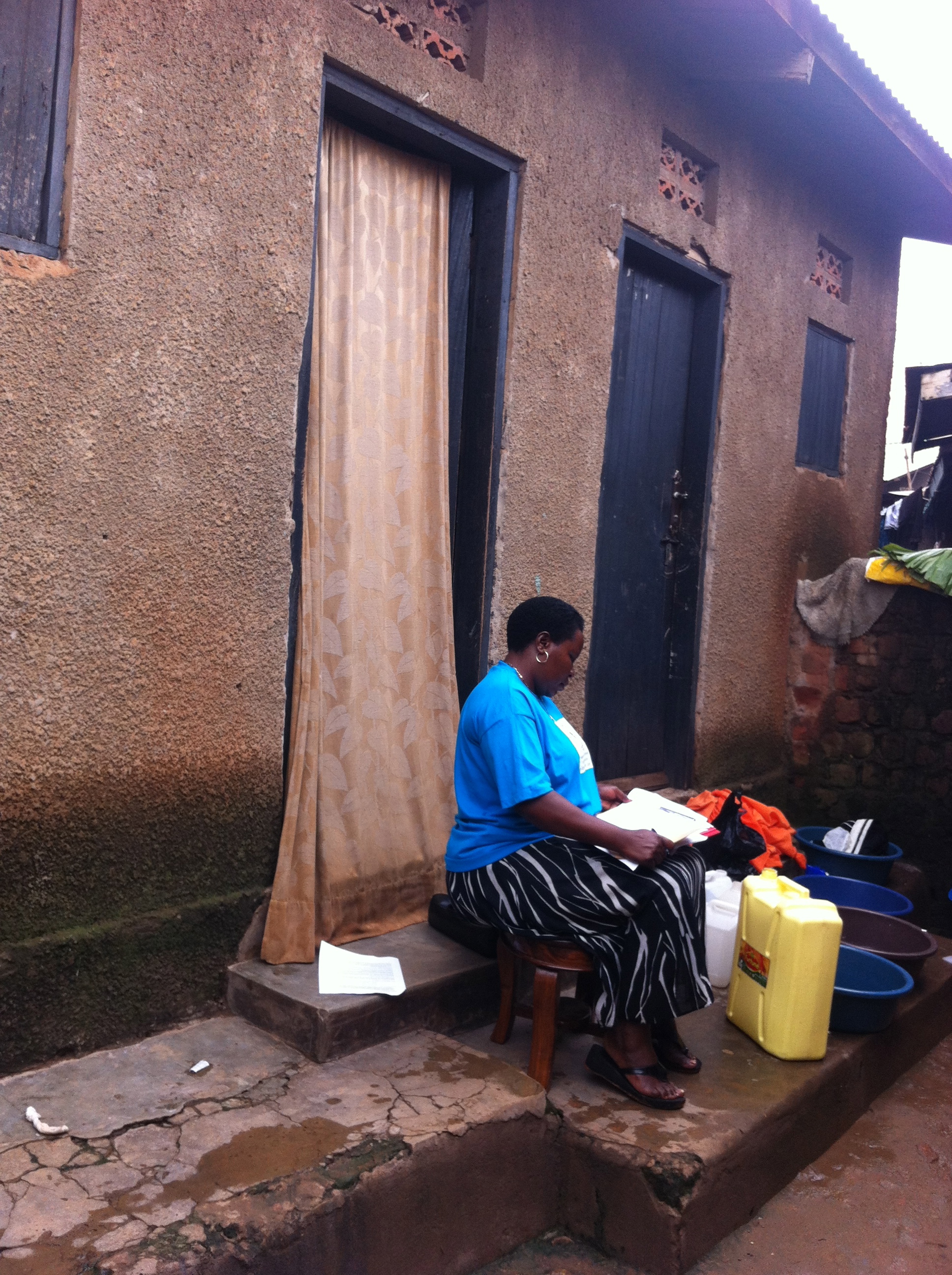
During my time with the ASPIRE project, I worked in the central slum of Kisenyi, located in the capital city of Kampala. The population of over 50,000 occupies a space of less than three square kilometres with limited access to health care, education and sanitation. Cervical cancer is a major public health threat in Uganda. Particularly at risk are women living in poverty with limited education and no access to screening methods. The Aspire project provides access to education, empowering the women and the community as a whole.
My role
I was recruited by the team to travel to Uganda and work on the next stage of research: implementing a randomized control trial (RCT). The study is a community research design testing for optimal cervical cancer screening in low resource settings between HPV self collection and VIA (visual inspection with acetic acid). The study design would include recruitment of 250 women into each of the two arms of the study for an initial questionnaire and randomization. Those who tested positive for HPV or observed cervical abnormalities would be treated, and receive a follow-up in one year’s time.
My primary role in the study was to coordinate the implementation of the many logistical and organizational tasks required for setting up an RCT. I also worked with a team of outreach workers to educate and engage women in the community. My colleagues (a research coordinator and three outreach workers) and I held education sessions for women of the community to spread awareness about cervical cancer. We also spoke with key community stakeholders and the women of the community to engage them to participate in the study. I worked alongside the local research coordinator, ensuring women were given access to cancer screening, and treatment when required.
Personal reflection
This project and overall experience had significant impacts on me both personally and professionally, giving me a stronger understanding of the importance of public health. Over the four months I worked closely with this team of amazing women, I was constantly taken aback by the dedication, drive and compassion I was exposed to on a daily basis. The team of outreach workers were motivated to provide sexual health access to the women of Kisenyi. Often working in 38 degree heat and through flash floods with waters at knee level, these teams continued to smile, laugh and listen to the women in their community. I had an overall sense of pride in my work and was proud to be a part of the ASPIRE team. This provided me with consistent motivation. The women of Kisenyi also embraced me as one of their own, and proved as interested in me as I was in them. I never felt like an outsider; I felt like a member of the community.
In research, like many other career paths, I believe it is common to focus on the academic goals and demands of work, often forgetting the impact on the community and individuals involved. Experiences such as my time in Kisenyi reinforce the importance of community-based public health research and its ability to change the lives of the people participating. This experience continues to motivate me personally and professionally in the field of research and public health. I will be forever grateful for the time I spent with the women in Kisenyi, and know it would not have been possible without the support of the Sheela Basrur Centre.
Nandita Perumal
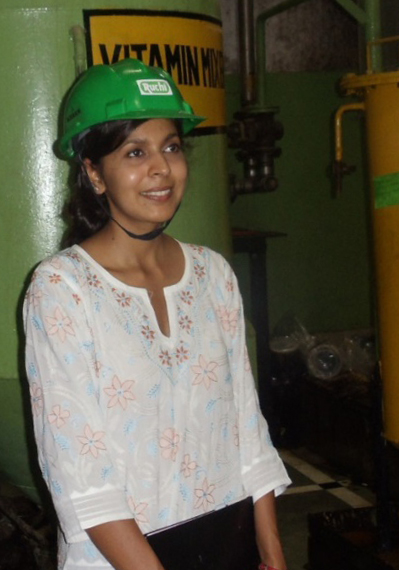
"I learned the importance of building strong partnerships within a project, providing a space for community engagement, and ensuring strong systems for monitoring and evaluation are established."
- Nandita Perumal
|
|---|
During the summer of 2014, Nandita Perumal undertook an eight week internship with the Global Alliance for Improved Nutrition (GAIN), as part of her practicum placement towards her PhD in Epidemiology at the University of Toronto. GAIN is an international non-governmental organization that focuses on public health nutrition and has offices in several countries, including India, where Nandita spent a portion of her internship. GAIN India supports projects on several different nutrition initiatives at the national and state levels, including staple food fortification, universal salt iodization, and production of fortified complementary foods for children under the age of three.
Nandita’s experience
The project
that I was involved in during my internship was located in Madhya
Pradesh, a central state in India, that has high burden of malnutrition, food
insecurity, and child mortality. In 2013, to mitigate the burden of micronutrient
deficiencies, specifically vitamin A and D deficiencies, GAIN partnered with a
local implementing organization, the Centre for Community Economics &
Development Consultants Society, to fund and scale-up the fortification
of soybean oil with vitamin A and D in Madhya Pradesh.
As a monitoring and evaluation intern, I had the opportunity to coordinate the
analyses of the multi-stage, stratified, cross-sectional baseline survey
conducted in Madhya Pradesh. I worked in close collaboration with the lead
investigator at the Public Health Foundation of India, who had conducted the
survey with a biostatistician. We worked to coordinate sampling weights estimations to account for the complex survey design;
establish a complete database; develop a data analysis plan and provide analytic oversight; estimate the prevalence of vitamin A and D deficiencies among women of reproductive age and children under five; and
contribute to the preparation of the baseline report for the survey.
I was also
responsible for liaising between colleagues in India and at the headquarters of
GAIN in Geneva, to ensure timely communication and feedback on ongoing
analyses.
Much of my role during the internship
enabled me to develop my leadership skills. I enhanced my knowledge of the burden of
micronutrient deficiencies in Madhya Pradesh and learned about the process and
challenges of conducting surveys in a resource-limited environment.
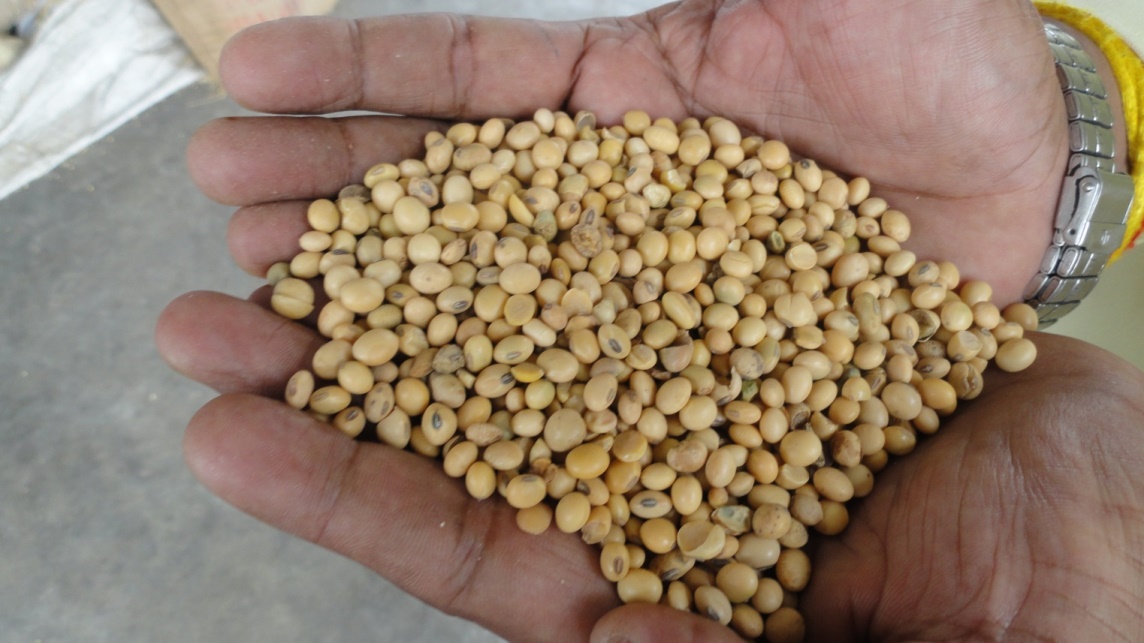 I also travelled to Indore, Madhya
Pradesh, to visit an oil fortification plant. There, I learned about the
process of soybean oil extraction, refining, and fortification with vitamins A
and D. I spent time with members of the Centre for Community Economics & Development Consultants Society and saw
first-hand the importance of their outreach efforts.
While in
India, I attended the South Asia Conference on Policies and Practices to
Improve Nutrition Security, where I learned about ongoing initiatives in India
to improve the nutritional status at the population level. This gave me a new
perspective on the challenges faced by organizations working in
South Asia. I also travelled to Indore, Madhya
Pradesh, to visit an oil fortification plant. There, I learned about the
process of soybean oil extraction, refining, and fortification with vitamins A
and D. I spent time with members of the Centre for Community Economics & Development Consultants Society and saw
first-hand the importance of their outreach efforts.
While in
India, I attended the South Asia Conference on Policies and Practices to
Improve Nutrition Security, where I learned about ongoing initiatives in India
to improve the nutritional status at the population level. This gave me a new
perspective on the challenges faced by organizations working in
South Asia.
Reflections
My internship with GAIN has been a truly enriching experience. I contributed to two abstract presentations showcased at the 2nd International Workshop on Micronutrients and Child Health in November 2014 in New Delhi, India.
I enjoyed working collaboratively with the project partners. Through informal discussions with various team members, who were incredibly helpful and willing to share their knowledge and experiences, I gained tremendous insight into the practicalities of large-scale program implementation. I learned the importance of building strong partnerships within a project, providing a space for community engagement, and ensuring strong systems for monitoring and evaluation are established. Through various discussions with my colleagues at GAIN, I acquired a better understanding of the global context of public health nutrition.
My experiences during this internship have broadened my perspective by exploring new areas of research and have further strengthened my interests in micronutrient nutrition and maternal and child health research. I am grateful to the Sheela Basrur Centre for the financial support that made this internship possible.
|