|
|
Page Content Congratulations to 2017 Student Travel Bursary Recipient
Carla King
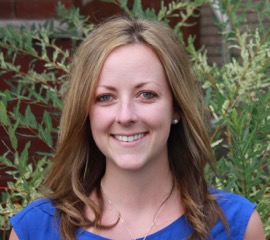
Queen's University, Master of Public Health student, Carla King, traveled to Haiti this past summer to contribute to a project exploring the unintended consequences of local United Nations Peacekeeping missions and the unique challenges faced by ‘Peace Babies’ -those conceived by UN personnel and born to local mothers.
Highlights from Carla’s journey are detailed in her travel log below.
Carla's experience
The purpose of the ‘Peace Babies in
Haiti’ project was to understand the experiences of local women and girls with
a child fathered by a United Nations peacekeeper. Understanding the complexities
that led to these interactions requires careful thought about the determinants of
health including income, social status, education and access to healthcare. The
project was directed by researchers in several domains of academia –public
health, social sciences, political sciences, and modern history - including my
supervisor, Dr. Susan Bartels, who works as a clinician-researcher specializing
in gender-based violence in war and humanitarian crises.
 To gather evidence to support
program and policy changes, a survey was conducted over a nine week period in
Haiti. Approximately 3000 participants told stories and answered questions
about their experiences living near a United Nations base in both urban and
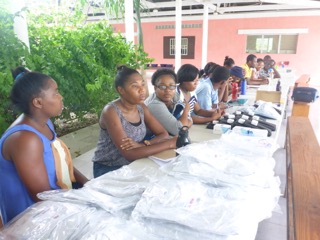
rural locations. A local team of 10 undergraduate social work students and two women
from a local organization supporting victims of sexual violence travelled
weekly collecting approximately 350 surveys per site. The research team was primarily
female in the hopes that women and girls would be more likely to share their
stories of sexual abuse, exploitation and pregnancy with other Haitian women. To gather evidence to support
program and policy changes, a survey was conducted over a nine week period in
Haiti. Approximately 3000 participants told stories and answered questions
about their experiences living near a United Nations base in both urban and
rural locations. A local team of 10 undergraduate social work students and two women
from a local organization supporting victims of sexual violence travelled
weekly collecting approximately 350 surveys per site. The research team was primarily
female in the hopes that women and girls would be more likely to share their
stories of sexual abuse, exploitation and pregnancy with other Haitian women.
Project Highlights
My role was to assist in the
implementation of the study, which included the development of materials to
train the local research assistants, in addition to monitoring and addressing issues
that arose with the data collection. I also co-managed the research assistant
team, organizing weekly travel, accommodation and food stipends for the team.
Working in Haiti presented many
unanticipated challenges with data collection, travel and team dynamics. The
research assistants began the interview process in locations with a history of high
unemployment rates and criminal activity. They struggled to find participants willing
to be interviewed. In some communities, residents expressed their discontent with
being asked to share their stories if there was no guarantee that change would
occur. To help resolve issues during data collection, the research team conveyed
their desire for support in the field, which provided me an opportunity to
travel with the team to two locations - St. Marc and Port Salut. The team was
concerned with my visibility during data collection at these sites. As a
non-Haitian, the team feared participants might associate my presence with the
United Nations and would be less likely to report any negative experiences. As
a preemptive measure, I spent the days in a separate location and met the team
to debrief in the evenings. Ongoing communication through platforms and methods
like group WhatsApp chats, team dinners, and celebrations of milestones (i.e.
1000 surveys collected) strengthened the collaboration among the team. This piece
was critical in keeping the group motivated and completing data collection on
time.
"Living in Haiti showcased many of the factors that determine health, including the difficulties in accessing health services and quality education, high unemployment rates and issues in the physical environment."
- Carla King
Photo caption (below): Carla providing instruction to the research assistants.
 My role on this project also
required me to address data monitoring issues which presented unique challenges
during my practicum. Prior to developing rapport with the team, it was
difficult to offer suggestions for improving the data collection process without
team members feeling inadequate in their work. The ratio of male to female
participants in the study was much higher than we anticipated and some of the
survey questions were not being utilized correctly. To overcome these issues,
we planned debriefing sessions to work as a group strategizing optimal ways to approach
potential female participants while sharing knowledge to assist in tackling
additional survey issues. By the end of the project, I formed strong and lasting
relationships with the research team members, valuing the opportunity to
provide support to the group while listening to their needs. These
communications skills are the foundation of leadership and team building. My role on this project also
required me to address data monitoring issues which presented unique challenges
during my practicum. Prior to developing rapport with the team, it was
difficult to offer suggestions for improving the data collection process without
team members feeling inadequate in their work. The ratio of male to female
participants in the study was much higher than we anticipated and some of the
survey questions were not being utilized correctly. To overcome these issues,
we planned debriefing sessions to work as a group strategizing optimal ways to approach
potential female participants while sharing knowledge to assist in tackling
additional survey issues. By the end of the project, I formed strong and lasting
relationships with the research team members, valuing the opportunity to
provide support to the group while listening to their needs. These
communications skills are the foundation of leadership and team building.
Personal Reflections
 My time in Haiti
truly was life-changing, contributing to both personal and professional growth.
When I took on the project, I did not anticipate that I would acquire the
skills to successfully manage a research team or the ability to mitigate the
issues that were continually presented to us. I developed an understanding of
the challenges associated with conducting research in a resource-limited
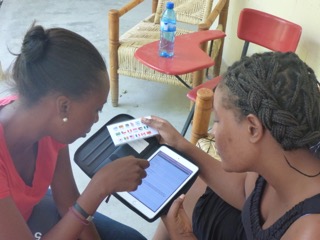
setting, including the use of technology (iPad) to collect data with very
limited electricity and internet access. I learned the importance of anticipating
challenges, being flexible and working as a team to develop innovative
solutions. My time in Haiti
truly was life-changing, contributing to both personal and professional growth.
When I took on the project, I did not anticipate that I would acquire the
skills to successfully manage a research team or the ability to mitigate the
issues that were continually presented to us. I developed an understanding of
the challenges associated with conducting research in a resource-limited
setting, including the use of technology (iPad) to collect data with very
limited electricity and internet access. I learned the importance of anticipating
challenges, being flexible and working as a team to develop innovative
solutions.
"The ‘Peace Babies’ project helped highlight my desire to work in culturally unique environments while contributing to field work supporting change for vulnerable populations."
- Carla King
 With the past
political and environmental instability Haiti has experienced, it was apparent
to me that the people there are making efforts to challenge the status quo. This
is a group of individuals who want to share their voices on these issues, making
changes in the areas that continue to impact their health. Living in Haiti
showcased many of the factors that determine health, including the difficulties
in accessing health services and quality education, high unemployment rates and
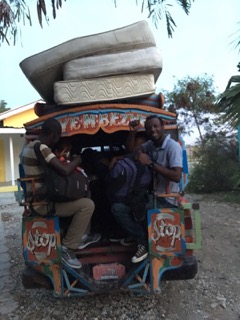
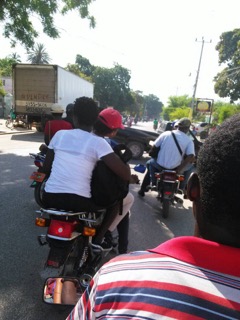
issues in the physical environment. One example was the lack of road safety
which was an issue that our team struggled with frequently. Just from the brief
time I spent in Haiti dealing with poor road quality, unsafe vehicles and a
lack of traffic regulations, it became apparent that these issues are likely
having a detrimental effect on the health of the residents. With the past
political and environmental instability Haiti has experienced, it was apparent
to me that the people there are making efforts to challenge the status quo. This
is a group of individuals who want to share their voices on these issues, making
changes in the areas that continue to impact their health. Living in Haiti
showcased many of the factors that determine health, including the difficulties
in accessing health services and quality education, high unemployment rates and
issues in the physical environment. One example was the lack of road safety
which was an issue that our team struggled with frequently. Just from the brief
time I spent in Haiti dealing with poor road quality, unsafe vehicles and a
lack of traffic regulations, it became apparent that these issues are likely
having a detrimental effect on the health of the residents.
 Despite
the challenges in Haiti, the opportunity to learn from a culture rich with
resiliency has shaped the next steps in my career. I hope to apply the
knowledge I acquired in diversity and inclusiveness, leadership and
assessment/analysis to understand and address the complex (and often intertwined)
determinants of health. The ‘Peace Babies’ project helped
highlight my desire to work in culturally unique environments while contributing
to field work supporting change for vulnerable populations. I am extremely
grateful for my time in Haiti and will definitely return. Despite
the challenges in Haiti, the opportunity to learn from a culture rich with
resiliency has shaped the next steps in my career. I hope to apply the
knowledge I acquired in diversity and inclusiveness, leadership and
assessment/analysis to understand and address the complex (and often intertwined)
determinants of health. The ‘Peace Babies’ project helped
highlight my desire to work in culturally unique environments while contributing
to field work supporting change for vulnerable populations. I am extremely
grateful for my time in Haiti and will definitely return.
|